The Reservist Recruitment Crisis: Why Britain's Part-Time Army Is Falling Apart — and What It Means for National Security
The British Army Reserve stands at its lowest strength since the territorial force was established over a century ago, yet the Ministry of Defence continues to pretend this represents a manageable administrative challenge rather than a strategic catastrophe in the making. With fewer than 25,000 trained reservists available for deployment – barely half the official target – Britain faces the uncomfortable reality that its part-time military backbone has been allowed to crumble just as international tensions reach levels not seen since the Cold War.
The Numbers Don't Lie
While ministers issue reassuring statements about military readiness, the statistics paint a picture of systematic institutional failure. Army Reserve recruitment has collapsed by over 40% in the past decade, with retention rates that would shame a budget retailer. Units across the country report manning levels so low that basic training exercises cannot be conducted safely, while specialist capabilities that took decades to build are being quietly wound down due to lack of personnel.
The human cost of this decline extends far beyond spreadsheets and organisational charts. Reserve units that once formed the backbone of local communities – the Territorials who responded to floods, provided security during emergencies, and maintained military traditions stretching back generations – now exist largely on paper. Drill halls that once buzzed with weekend training activity stand empty, their car parks serving as monuments to institutional neglect.
Bureaucracy Over Battle Readiness
The rot begins with a recruitment process that seems designed to deter rather than attract potential reservists. Civilians expressing interest in territorial service face months of bureaucratic hurdles, medical examinations that would challenge Olympic athletes, and security clearance procedures that treat weekend warriors like potential state secrets. By the time the paperwork is complete, enthusiasm has long since evaporated.
This administrative sclerosis reflects a fundamental misunderstanding of what motivates people to volunteer for military service. Potential reservists are not applying for civil service positions – they are offering to sacrifice weekends and annual leave for the privilege of serving their country. The current system treats this patriotic impulse as an inconvenience to be processed rather than an asset to be cherished.
The Regimental Identity Crisis
Perhaps more damaging than bureaucratic incompetence has been the systematic destruction of regimental identity that once made territorial service meaningful. Historic county regiments with centuries of battle honours have been merged, renamed, and reorganised so frequently that recruits no longer understand what they are joining or why it matters.
This vandalism against military tradition represents more than nostalgic sentimentality – it destroys the very bonds that make voluntary military service attractive. Young people do not volunteer to join 'Regional Infantry Battalion 7(E)' – they want to serve with the Yorkshire Regiment, the Royal Welsh, or the Black Watch. When bureaucrats erase these identities in pursuit of administrative efficiency, they eliminate the emotional connection that transforms civilians into soldiers.
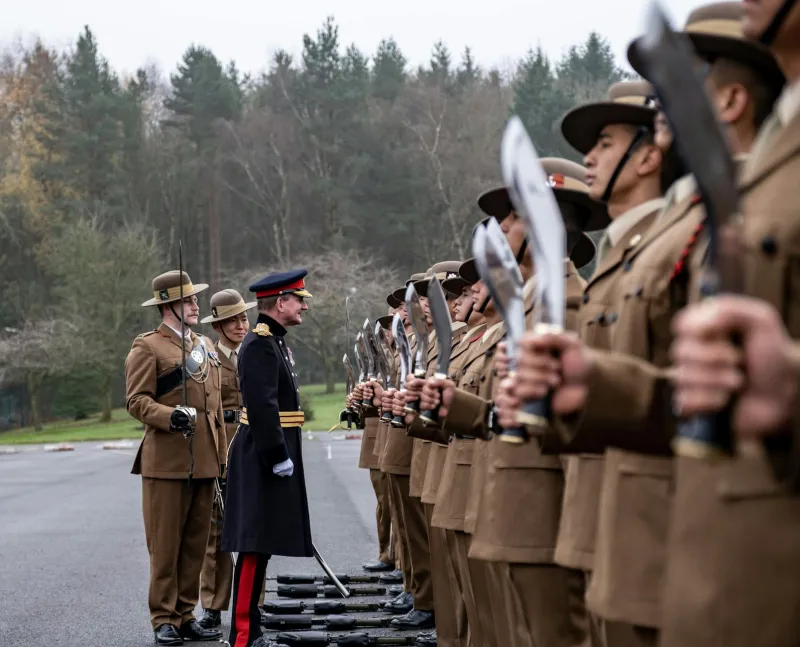
 Photo: Royal Welsh, via www.alpenverein-austria.at
 Photo: Yorkshire Regiment, via winbuzzer.com
Economic Reality Versus Military Fantasy
The financial incentives for reserve service have failed to keep pace with economic reality, creating a situation where military volunteers are effectively subsidising their own patriotism. Weekend training pays rates that barely cover travel costs, while annual camps offer compensation that falls well short of lost civilian earnings for skilled professionals.
This economic illiteracy extends to the broader support structure surrounding reserve service. Employers receive no meaningful incentives to support employees who volunteer for military duty, while the self-employed face significant financial penalties for time spent in uniform. The result is a system that systematically excludes the very professionals – tradesmen, technicians, and specialists – whose skills are most needed in modern warfare.
Strategic Blindness
The decline of reserve forces occurs precisely when international circumstances demand their expansion. NATO commitments require rotation of forces that simply cannot be sustained by regular units alone, while domestic security challenges – from terrorism to natural disasters – demand surge capacity that only reserves can provide.
Yet the Ministry of Defence continues to treat reserve forces as a luxury rather than a necessity, cutting training budgets while increasing administrative burdens. This strategic myopia ignores the basic mathematics of military deployment: regular forces can deploy once every three years at sustainable tempo, but operations in multiple theatres require reserve augmentation to prevent burnout and maintain capability.
The Continental Model
European allies facing similar security challenges have taken radically different approaches to reserve forces, with instructive results. Switzerland maintains reserve participation rates that would be considered impossible by British standards, achieved through social expectations that make military service a civic duty rather than an eccentric hobby. Finland has expanded reserve training in direct response to Russian aggression, recognising that citizen-soldiers represent the ultimate guarantee of national independence.
These nations understand that reserve forces are not simply a cheaper alternative to regular troops – they are a strategic asset that provides depth, resilience, and connection between military and civilian society. Britain's abandonment of this model leaves the nation dangerously dependent on a regular force too small for its global commitments.
The Recruitment Solution
Reviving British reserve forces requires abandoning the bureaucratic mindset that treats volunteers as problems to be processed rather than assets to be developed. Recruitment should prioritise speed and simplicity, with background checks conducted after enlistment rather than before. Medical standards should reflect the reality of weekend service rather than demanding fitness levels appropriate for special forces selection.
More fundamentally, the reserves need a clear mission that resonates with potential recruits. This means restoration of regimental identity, meaningful training that develops real skills, and recognition that territorial service represents a genuine contribution to national defence rather than elaborate military role-playing.
The Economic Equation
Financial reforms must recognise that reserve service competes with civilian opportunities that have become increasingly lucrative. Weekend training rates should reflect the true value of military skills, while employers supporting reserve service should receive tax incentives that make patriotism profitable rather than expensive.
The current system that expects civilians to subsidise their own military service while bureaucrats debate optimal force structures represents a fundamental misunderstanding of human motivation. People will volunteer to serve their country, but they will not volunteer to impoverish themselves for the privilege.
Time for Honesty
Britain's reserve forces crisis reflects broader institutional failures that prioritise bureaucratic convenience over strategic necessity. The choice is stark: either restore the reserves as a genuine military capability, or abandon the pretence that Britain can maintain global commitments with current force levels.
The cost of restoration is measured in millions – the cost of failure will be measured in strategic vulnerability that no amount of regular forces can compensate for when the next crisis arrives.