Equal Before the Law? The CPS's Two-Tier Justice Is No Longer a Theory — It Is a Documented Reality

Equal Before the Law? The CPS's Two-Tier Justice Is No Longer a Theory — It Is a Documented Reality
The Crown Prosecution Service operates under a two-stage test before bringing a charge: sufficient evidence, and whether prosecution is in the public interest. Both limbs are intended to be applied consistently, neutrally, and without reference to the demographic characteristics of the suspect or the likely political temperature of the resulting case. The evidence that this is actually happening — that the CPS applies its charging threshold with genuine evenhandedness regardless of who is in the dock — is, at best, contested. At worst, it is contradicted by a pattern of outcomes that no honest observer can attribute entirely to coincidence.
This is not a fringe concern. It is a question being asked by senior lawyers, former prosecutors, and members of the public who have watched specific cases proceed — or not proceed — and found the decisions inexplicable on legal grounds alone.
The Grooming Gangs Context
No serious discussion of selective prosecution in modern Britain can avoid the grooming gangs scandal. The systematic sexual exploitation of children, predominantly by networks of men of British-Pakistani heritage, in towns including Rotherham, Rochdale, Telford, and Huddersfield, was not simply a failure of policing. It was, in significant part, a failure of prosecution.
The Independent Inquiry into Child Sexual Abuse, which reported in 2022, documented that agencies including the CPS were aware of exploitation patterns and did not respond adequately. Alexis Jay's report noted that concerns about 'community cohesion' and the fear of being perceived as racist contributed to institutional paralysis. The CPS, in its guidance on 'group-based child sexual exploitation,' has subsequently acknowledged that cases involving networks were historically under-prosecuted relative to individual offenders.
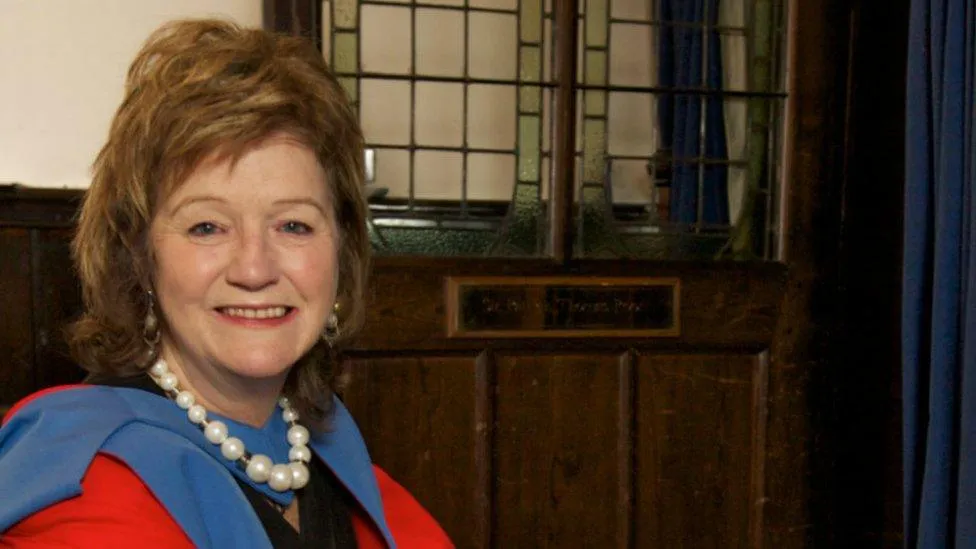 Photo: Alexis Jay, via ichef.bbci.co.uk
That acknowledgement is welcome. It does not, however, address the logical implication: if the threshold for prosecution was effectively raised in cases where defendants belonged to a particular community, that is the textbook definition of unequal justice. The CPS's own retrospective recognition of the failure does not exonerate the institution — it confirms the critique.
The Data Problem
The CPS publishes annual data on charging decisions, outcomes, and — to a limited degree — the characteristics of defendants and victims. What it does not publish in any systematic form is a breakdown of charging rates by the ethnicity of suspects relative to the strength of the evidential file. Without that data, definitive statistical proof of differential treatment is difficult to establish. That difficulty is, it must be said, convenient for an institution that would prefer the question to remain in the realm of assertion rather than evidence.
What the data does show is instructive nonetheless. The CPS's Violence Against Women and Girls strategy and its separate guidance on hate crime both contain explicit instructions to consider the 'vulnerability' of victims and the 'community impact' of prosecution decisions. These are not unreasonable considerations in isolation. But when 'community impact' becomes a factor that can effectively suppress a prosecution — when the anticipated reaction of a particular community to seeing its members charged is treated as a reason to hesitate — the public interest test has been corrupted.
Former senior prosecutor Nazir Afzal, who secured the landmark Rochdale convictions in 2012, has been candid about the institutional reluctance he encountered. He has stated publicly that an earlier CPS decision not to prosecute in that case was wrong, and that the file should have been charged. He did not attribute that failure to malice. He attributed it to risk-aversion. The distinction matters less than the outcome.
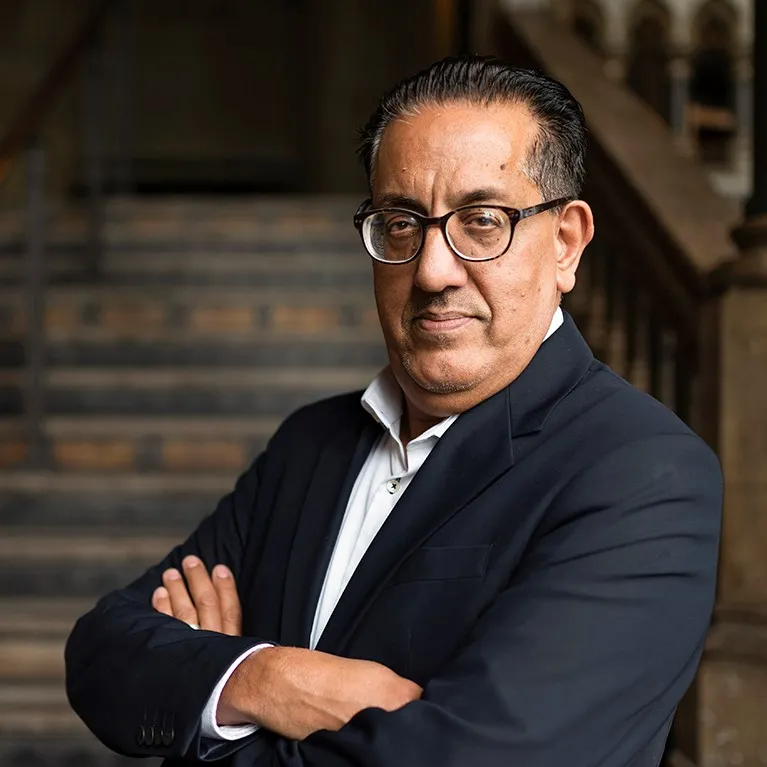 Photo: Nazir Afzal, via www.manlitphil.ac.uk
The Counter-Argument and Its Limits
The CPS and its defenders will point out that charging decisions are made on the basis of evidence and public interest, that the Code for Crown Prosecutors contains no provision for differential treatment by ethnicity, and that accusations of two-tier justice are often made by those with a political axe to grind. Director of Public Prosecutions Stephen Parkinson has emphasised the CPS's commitment to independence and consistency.
Those points deserve to be taken seriously. The CPS does secure convictions across a wide range of cases involving defendants of all backgrounds. The grooming gangs failures, however egregious, are not necessarily representative of the institution's daily operation. And it is true that some accusations of selective prosecution come from quarters that are less interested in equal justice than in making a political point.
Nevertheless, the strongest version of the counter-argument — that the CPS is institutionally impartial and that apparent inconsistencies reflect evidential complexity rather than identity-based risk-aversion — runs directly into the CPS's own admissions. You cannot simultaneously argue that the institution applies the law evenhandedly and concede that community sensitivity contributed to systematic under-prosecution in one of the largest child sexual exploitation scandals in British history. Those two positions are irreconcilable.
The Asymmetry of Enforcement
The problem is not confined to the grooming gangs cases. Observers across the political spectrum have noted an apparent asymmetry in the speed and vigour with which the CPS pursues certain categories of offence depending on the identity of those involved. Hate speech prosecutions, for example, have been brought in cases involving social media posts about Islam or race where equivalent posts targeting Christianity or white Britons have not attracted the same prosecutorial attention.
The CPS's own hate crime data shows that prosecutions for religiously aggravated offences overwhelmingly involve anti-Muslim and antisemitic incidents — which is, in one sense, a reflection of where reported offending is concentrated. But critics, including the Free Speech Union, have documented cases where the evidential threshold for pursuing speech-related prosecutions appears to have been applied differently depending on the target community. The CPS disputes this characterisation. The cases themselves are publicly available for scrutiny.
Restoring the Principle
The remedy is not complicated in principle, even if it is politically uncomfortable in practice. The CPS should publish full, disaggregated data on charging decisions by offence type, evidential strength, and suspect and victim characteristics, in a form that allows genuine external scrutiny. The Code for Crown Prosecutors should be reviewed to remove any provision that could be interpreted as permitting community impact considerations to function as a de facto charging threshold. And the Attorney General's oversight function should be exercised with genuine rigour rather than as a formality.
Above all, the political class needs to stop treating the equal application of the law as a culture war talking point and start treating it as what it actually is: the foundational principle upon which public consent to the entire criminal justice system rests.
When citizens conclude — with evidence — that the law applies differently to different groups, they do not become more law-abiding. They become more cynical, more tribal, and more willing to take matters into their own hands. The CPS's institutional credibility is not merely a bureaucratic concern. It is a matter of social order.
Two-tier justice is not a conspiracy theory — it is an institutional failure hiding in plain sight, and it corrodes the rule of law far more effectively than any individual criminal ever could.