One Nation, Four Budgets: The Devolution Racket That Leaves England Holding the Bill

A Union in Name Only
When the Blair government devolved power to Edinburgh and Cardiff in 1999, it was presented as a modernising triumph — a recognition of distinct national identities within a united kingdom, and a settlement that would, its architects promised, kill nationalism stone dead. A quarter of a century later, the SNP governs Scotland, Plaid Cymru sits in coalition in Cardiff, and the United Kingdom's constitutional arrangements have become so lopsided that they now actively generate the resentment they were designed to dissolve.
The problem is not devolution itself. There is a principled case for subsidiarity — for decisions being made as close to the people they affect as possible. The problem is that the devolution enacted in 1999, and extended haphazardly ever since, was asymmetric by design and dishonest in its implications. Scotland received a parliament with primary legislative powers and limited tax-varying authority. Wales received an assembly that has since been upgraded to a Senedd with expanding competencies. Northern Ireland received its own arrangements under the Good Friday Agreement. England received nothing — except the bill.
The Barnett Formula: Britain's Most Expensive Constitutional Fudge
At the heart of this injustice sits the Barnett Formula, a mechanism devised in 1978 by Joel Barnett — who later described it as a short-term fix that had long outlived its purpose — to distribute public spending across the four nations. Under Barnett, Scotland, Wales, and Northern Ireland receive a population-based share of changes in English public spending. In practice, this produces per-capita public expenditure in Scotland significantly higher than in England.
 Photo: Joel Barnett, via cdn.asp.events
In 2023-24, identifiable public spending per head in Scotland was approximately £14,000 — compared to roughly £11,500 in England. The gap between Scotland and England represents billions of pounds annually flowing from English taxpayers to fund services in a country whose elected representatives then vote on matters that affect only England. This is not a theoretical grievance. It is a structural transfer, operating year after year, with no democratic mandate from the people paying for it.
Wales presents an even starker picture. Cardiff has consistently received more per capita than its relative economic output or need formula would strictly justify, while the Welsh Government has used its devolved competencies to pursue policies — including, most recently, default 20mph speed limits and a moratorium on new road building — that reflect an ideological agenda rather than Welsh public demand. The 2023 Welsh Government survey found that a majority of Welsh residents opposed the blanket 20mph policy. They were overruled by a devolved administration answerable to its own priorities, not to the people it governs.
The West Lothian Question: Still Unanswered After Fifty Years
In 1977, the late Tam Dalyell MP asked what has become known as the West Lothian Question: how can it be right for Scottish MPs at Westminster to vote on matters affecting only England, while English MPs have no corresponding vote on devolved Scottish matters? Dalyell never received a satisfactory answer. Nobody has.
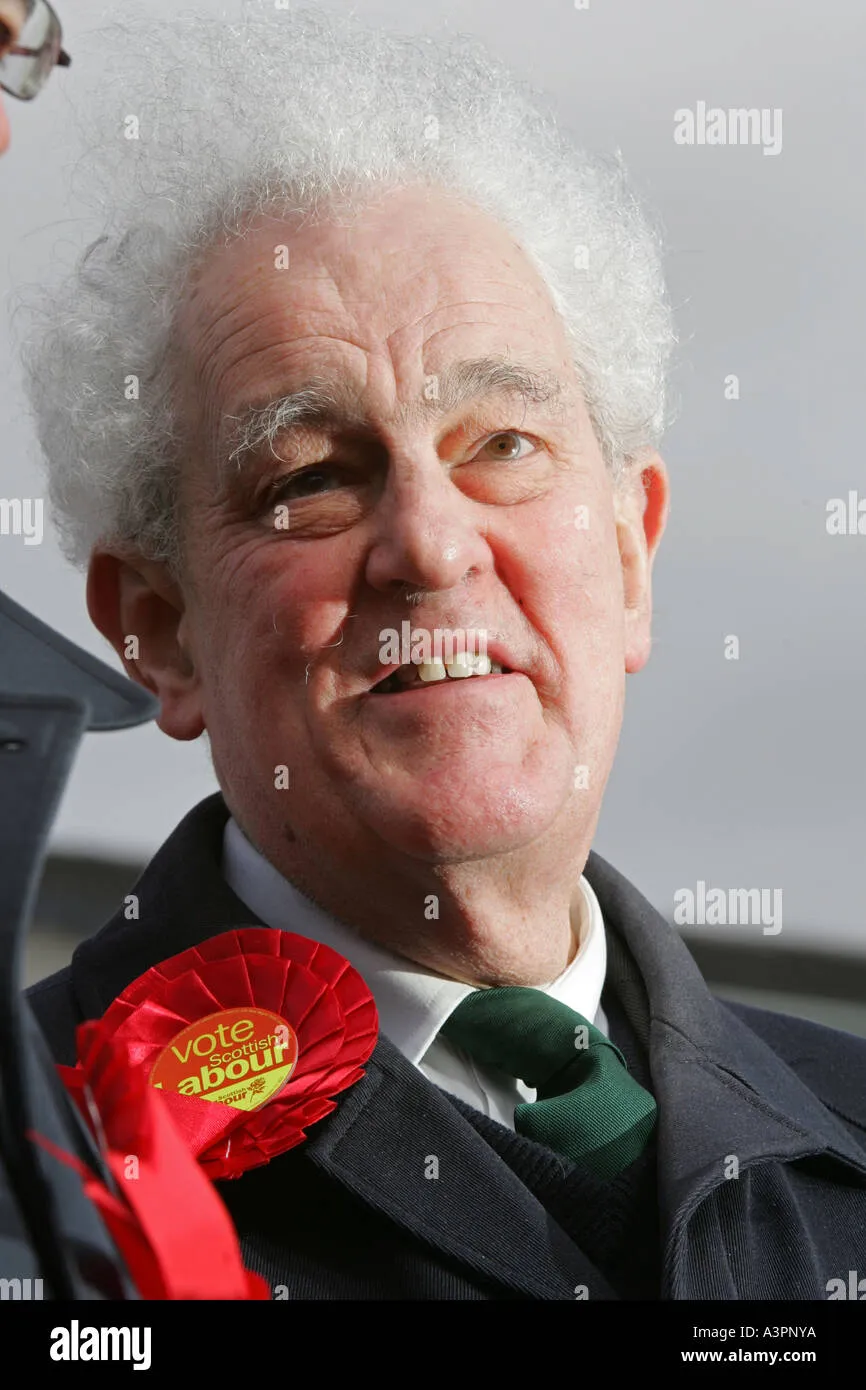 Photo: Tam Dalyell, via c8.alamy.com
The coalition government's attempt to resolve this — English Votes for English Laws, introduced in 2015 — was a procedural half-measure that was quietly abolished in 2021 with almost no public debate. The effect is that Scottish, Welsh, and Northern Irish MPs can and do vote on English NHS policy, English education legislation, and English planning law. English MPs cannot reciprocate. This is not a quirk of parliamentary procedure. It is a democratic deficit that would provoke outrage if it operated in reverse.
Labour's recent expansion of devolution — handing greater powers to combined authorities and metro mayors in England — does not resolve this. It fragments England further while leaving the fundamental imbalance intact. Greater Manchester and the West Midlands now have mayors with meaningful powers. Rural England, market towns, and the vast swathes of the country outside major conurbations have precisely nothing.
The Vacuum That Labour Is Filling
The Conservative Party's failure to develop a coherent English identity politics is not merely an intellectual oversight. It is a strategic catastrophe. For decades, the right has treated English national sentiment as either embarrassing or dangerous — too close to nationalism, too easily caricatured. The result is that the political energy around English identity has been left to fester without direction, while Labour has successfully captured devolved institutions in Wales and positioned itself as the party of regional empowerment in England through its metro mayor strategy.
There is a genuine, popular, and entirely legitimate constituency for English self-governance. Polling consistently shows that English voters — including Labour voters — believe England is treated unfairly within the current constitutional settlement. A 2021 YouGov survey found that 60 per cent of English respondents thought the Barnett Formula was unfair. That sentiment is not nativist. It is rational. It reflects a straightforward perception of imbalance, and it deserves a serious political response.
The right response is not English nationalism in a narrow ethnic sense. It is English constitutionalism — a demand for equivalent democratic accountability, for a needs-based funding formula that replaces Barnett, and for a parliament or legislative mechanism that gives England the same self-governing capacity enjoyed by the other nations of the union.
Reform or Rupture
The longer the asymmetric settlement persists, the more it corrodes the union it was meant to secure. Scottish nationalism has not been killed by devolution — it has been sustained by it, given an institutional platform and a grievance factory that will always find new complaints to prosecute. Welsh nationalism has followed the same trajectory. The lesson is clear: devolving power without establishing fair fiscal arrangements and reciprocal democratic rights does not satisfy nationalist sentiment. It feeds it.
A serious Conservative movement must engage with this. Not to abolish devolution — that ship has sailed — but to rebalance it. To replace the Barnett Formula with a transparent needs-based formula. To establish English Votes for English Laws as a permanent, meaningful constitutional principle. And to articulate, without apology, that England is a nation with legitimate interests that deserve representation.
The devolution settlement has delivered parliamentary theatre in Edinburgh and Cardiff while leaving England ungoverned, underfunded relative to its contribution, and constitutionally voiceless — and the party that finally makes that case clearly will own the political landscape for a generation.