The Regulator as Censor: Ofcom's Mission Creep Is a Direct Threat to Free Political Speech
The Regulator as Censor: Ofcom's Mission Creep Is a Direct Threat to Free Political Speech
There is a particular kind of censorship that liberal democracies find hardest to resist — not the jackbooted variety that announces itself with arrests and bonfires, but the procedural kind, delivered through regulatory frameworks, compliance burdens, and the ever-expanding definition of content that requires 'careful handling.' Britain is currently living through an accelerating version of the latter, and Ofcom — the Office of Communications — is increasingly at its centre.
Ofcom was created by the Communications Act 2003 to regulate broadcasting, telecommunications, and postal services. Its core functions were largely technical: licensing, spectrum management, ensuring broadcasters met basic standards of accuracy and impartiality. It was, by design, a creature of administrative rather than political function. That design is now under considerable strain.
From Regulator to Ideological Arbiter
The passage of the Online Safety Act 2023 represented a seismic expansion of Ofcom's remit, extending its reach from traditional broadcasters to online platforms operating in the United Kingdom. The Act requires platforms to assess and mitigate risks from 'harmful content' — a category whose boundaries Ofcom itself is empowered to define and refine through codes of practice. The regulator is, in effect, being asked to decide what kinds of speech the British public should be permitted to encounter online.
That is not a technical question. It is a profoundly political one. And the concern, documented by free speech organisations including the Free Speech Union and Index on Censorship, is that Ofcom's interpretation of harm has consistently tilted in a direction that is uncomfortable for conservative, traditionalist, or simply heterodox opinion.
Consider the treatment of GB News. The channel, launched in 2021 as an explicitly opinion-forward broadcaster in the mould of American and Australian conservative media, has faced a disproportionate volume of Ofcom investigations relative to its audience share. Several of these investigations were triggered by complaints about political commentary — commentary that, in any robust conception of free expression, falls squarely within the bounds of legitimate democratic debate. The regulator's intervention in matters such as whether a presenter's personal political views constitute a breach of impartiality rules has had a demonstrable chilling effect on the channel's editorial decisions.
 Photo: GB News, via 5pillarsuk.com
Ofcom would argue, not unreasonably, that it is merely applying the rules as Parliament set them. That response, however, sidesteps the more fundamental question: who decided that broadcast impartiality rules — developed in an era of three television channels and a single commercial radio network — should apply with equal force to a digital-age opinion channel that makes no pretence of neutrality and whose audience understands precisely what it is watching?
The Online Safety Act: A Censor's Charter in Respectable Dress
The Online Safety Act's provisions on 'legal but harmful' content were eventually removed from the legislation following sustained pressure from free speech advocates. The victory was real but partial. Ofcom retains extensive powers to require platforms to manage risks from content that, while not unlawful, it deems harmful to specified categories of user. The practical effect is that platforms — facing substantial fines of up to ten per cent of global turnover for non-compliance — have every incentive to over-remove content rather than risk regulatory sanction.
This is the architecture of soft censorship. No individual piece of content need be formally banned. Instead, the regulatory environment creates a structural pressure towards caution that operates invisibly, at the level of platform algorithms and content moderation policies, in ways that are almost impossible to challenge or scrutinise. The speech that disappears does so quietly, without a ruling, without a named complainant, and without any right of appeal.
Professor Lorna Woods of the University of Essex, one of the architects of the legal framework underpinning the Online Safety Act, has argued that the legislation represents a proportionate response to genuine harms. That is the strongest version of the pro-regulation argument, and it deserves engagement. Online platforms do host genuinely dangerous content. Children are exposed to material that causes measurable harm. The state is not wrong to respond.
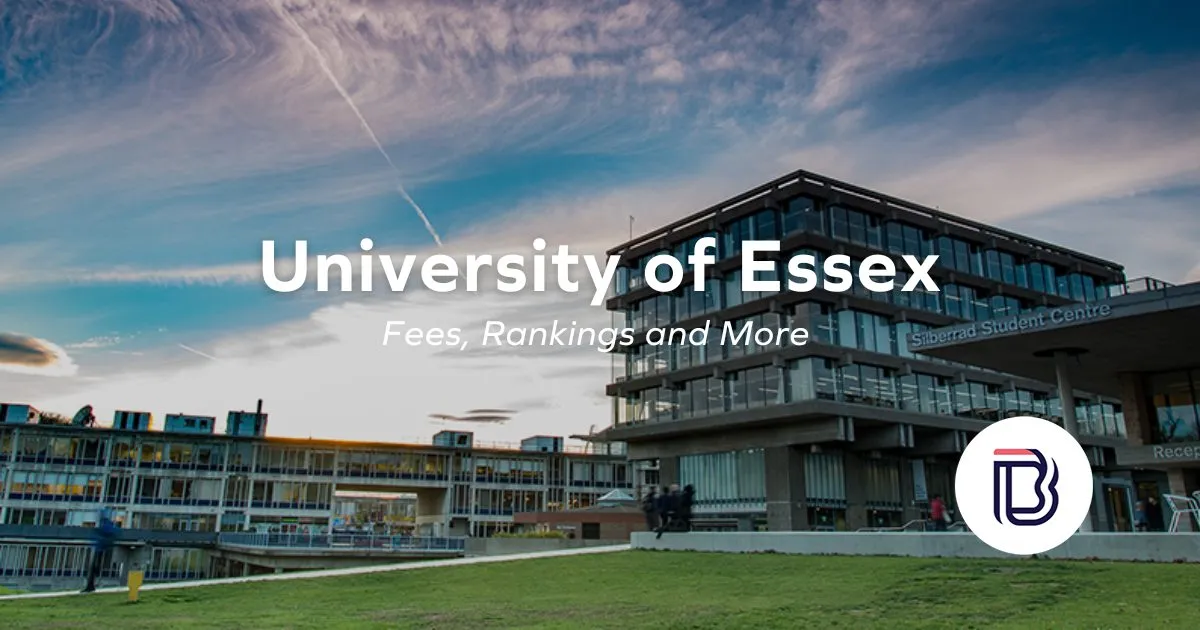 Photo: University of Essex, via britannia-study.co.uk
But the mechanism chosen — granting a single unelected regulator the power to define harm and enforce compliance across the entirety of the British internet — creates a concentration of speech-regulatory authority that is without precedent in peacetime British history. The question is not whether some regulation is justified. It is whether this regulator, with this remit, accountable in this way, is the appropriate instrument for decisions of this magnitude.
Who Guards the Guardians?
Ofcom's board and senior leadership are appointed through a process that, while formally independent, draws heavily from the same metropolitan professional class that populates the BBC, the senior civil service, and the major broadcast media organisations. This is not a conspiracy — it is a structural feature of how British institutions recruit. But it does mean that the regulator's instinctive sense of what constitutes 'harmful' or 'impartial' content is likely to reflect the assumptions of that particular milieu rather than those of the broader British public.
Polling consistently shows that a significant proportion of the British public believes that free speech is under threat and that media organisations are biased against conservative viewpoints. An Ofcom that is institutionally deaf to that perception — that regards it as itself a form of harmful misinformation — is an Ofcom that has ceased to function as a neutral regulator and has become a participant in the culture war it claims to be above.
What Reform Looks Like
The solution is not to abolish media regulation. It is to constrain it. Ofcom's Online Safety Act powers should be subject to meaningful parliamentary scrutiny of individual codes of practice before they take effect, not merely after. The definition of 'harmful content' should be set by primary legislation, not by regulatory discretion. And the impartiality rules that were designed for the analogue broadcasting era should be formally reviewed to determine whether their application to digital opinion media serves any coherent public interest.
Freedom of expression is not an inconvenience to be managed by well-meaning administrators. It is the precondition of every other democratic freedom — and a regulator that has forgotten that distinction is not a neutral referee but a danger to the public interest it was created to serve.
When the state's preferred instrument for managing inconvenient political speech is a quango, the threat to liberty is no less real for being dressed in the language of safety.