Last Orders for the High Street: Why Britain's Town Centres Die When the Sun Goes Down

A Nation That Goes to Bed at Six
There is a particular kind of melancholy to a British town centre after dark. Not the melancholy of somewhere that was never meant to be vibrant — but the melancholy of somewhere that once was, and no longer is. The restaurants that shuttered during the pandemic and never reopened. The bars that held on through lockdown only to be finished off by the energy price spike and the business rates bill that followed. The independent cinema, the jazz venue, the family-run Italian that had been there for thirty years. Gone, most of them, or going.
The numbers tell the story with uncomfortable clarity. According to the Centre for Retail Research, the UK saw a net loss of thousands of hospitality and leisure businesses in the years following 2020, with independent operators — who lack the financial cushion of national chains — disproportionately affected. The British Beer and Pub Association has consistently reported that pub closures, while slowing from the peak years, remain structurally elevated, with cost pressures rather than falling demand cited as the primary driver by the majority of operators surveyed.
The Local Data Company's tracking of high street vacancy rates has shown persistent elevation in town centres across the Midlands, the North, and coastal communities — precisely the areas that were promised a levelling-up dividend and received instead a levelling-down reality.
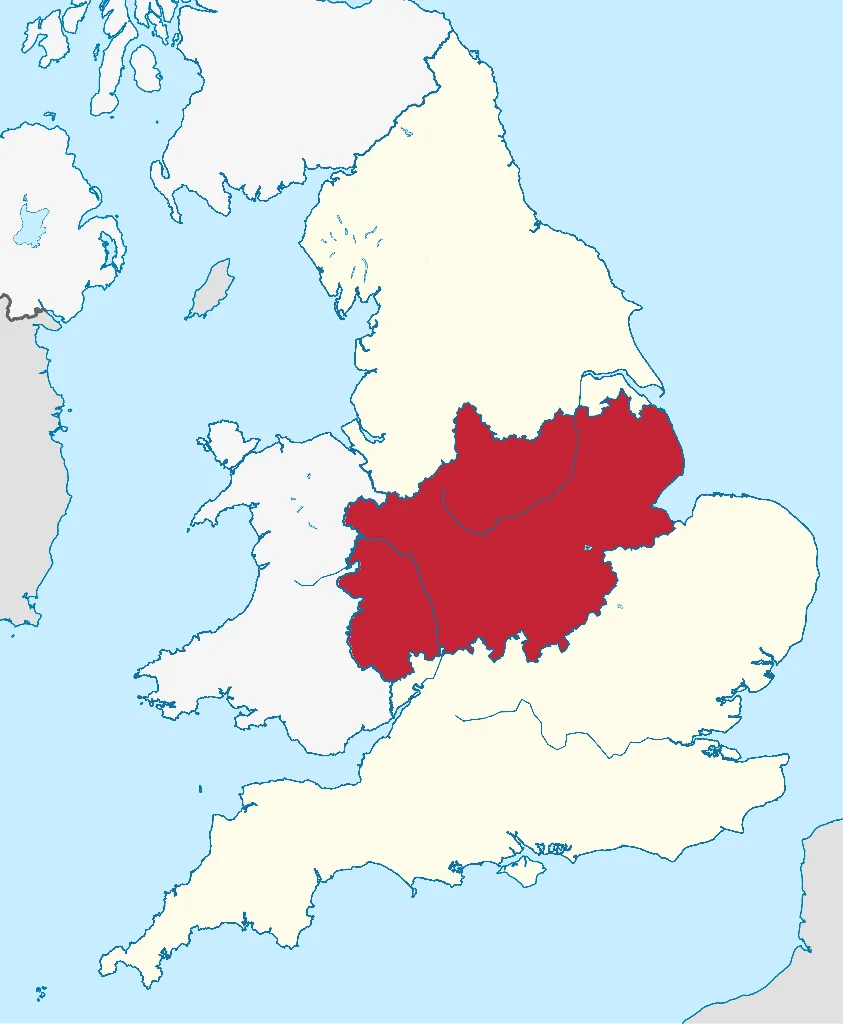 Photo: the Midlands, via upload.wikimedia.org
The Tax That Kills Before the Customer Arrives
To understand why the evening economy is collapsing, you need to understand business rates — a tax so perversely structured that it would be rejected as a satirical invention if it were proposed today. Business rates are calculated on the notional rental value of a property, meaning that a bar or restaurant occupying a prominent high-street site pays a tax bill calibrated to a property market that may have been booming a decade ago and has since declined sharply. The tax is levied regardless of whether the business is profitable, regardless of whether footfall has halved, and regardless of whether the building next door is empty.
For a hospitality business operating on margins that were already thin before the cost-of-living crisis, business rates represent an existential burden. The British Hospitality Association has repeatedly published data showing that rates bills can account for a disproportionate share of total occupancy costs for pubs and restaurants, in some cases exceeding the rent itself. The reliefs available — including the small business rates relief scheme — are partial, inconsistently applied, and subject to the kind of bureaucratic complexity that favours large operators with dedicated finance teams over sole traders working sixteen-hour days.
The previous Conservative government promised reform and delivered incremental adjustments. The current Labour administration has shown no appetite for the root-and-branch overhaul that the sector actually needs. What it has delivered instead is an increase in employer National Insurance contributions — announced in the October 2024 Budget — that the hospitality industry warned, loudly and with specific numerical evidence, would accelerate closures and suppress hiring. The warnings were noted and ignored.
Licensing, Policing, and the Slow Strangulation of the Night
Business rates are not the only instrument of destruction. Licensing conditions — already examined in these pages in the context of the broader regulatory burden — have become increasingly onerous in many local authority areas, with conditions attached to premises licences that add cost and complexity without any demonstrable benefit to public safety. Late-night levies, introduced as a mechanism to fund policing in entertainment districts, have in practice operated as a tax on the businesses least responsible for the disorder they are meant to address.
And then there is the policing question, which is perhaps the most politically charged element of this story. Anti-social behaviour in town centres after dark is not a myth propagated by the Daily Mail. It is a documented reality that directly suppresses footfall and drives away precisely the customers — families, older residents, couples on a night out — who would otherwise sustain the evening economy. When people do not feel safe walking from the car park to the restaurant, they do not go to the restaurant. They stay home. The delivery app wins; the high street loses.
The police, chronically underfunded and increasingly consumed by complex casework, have retreated from the visible, neighbourhood-level presence that once served as a deterrent. Town centres that once had a recognisable police presence on Friday and Saturday evenings now rely on private security employed by individual businesses — an arrangement that is both inadequate and inequitable, since smaller operators cannot afford it.
Labour's instinct, faced with this problem, is to regulate. To impose conditions, to create frameworks, to establish task forces. What it is not instinctively drawn to is enforcement — the unglamorous, resource-intensive, politically thankless work of putting officers on streets and holding those who make town centres dangerous to account.
The Strongest Counter-Argument — and Why It Fails
The most credible defence of the current trajectory is that the night-time economy's difficulties are structural and global — that the rise of streaming, home delivery, and changing social habits among younger generations means that the high-street evening economy was always going to contract, and that policy can only do so much to reverse a cultural tide.
There is something in this. Consumer behaviour has genuinely shifted. But the argument proves too much. If structural forces alone explained the collapse, we would expect to see similar patterns across comparable European economies. What we actually see is that cities in Spain, Italy, the Netherlands, and Germany — each with their own regulatory challenges — have maintained far more vibrant evening economies than equivalent British towns. The difference is not culture; it is the cost and regulatory environment within which businesses operate. Britain has made itself uniquely hostile to the kind of small, independent operator who gives a town centre its character, and the results are visible on every emptying high street in the country.
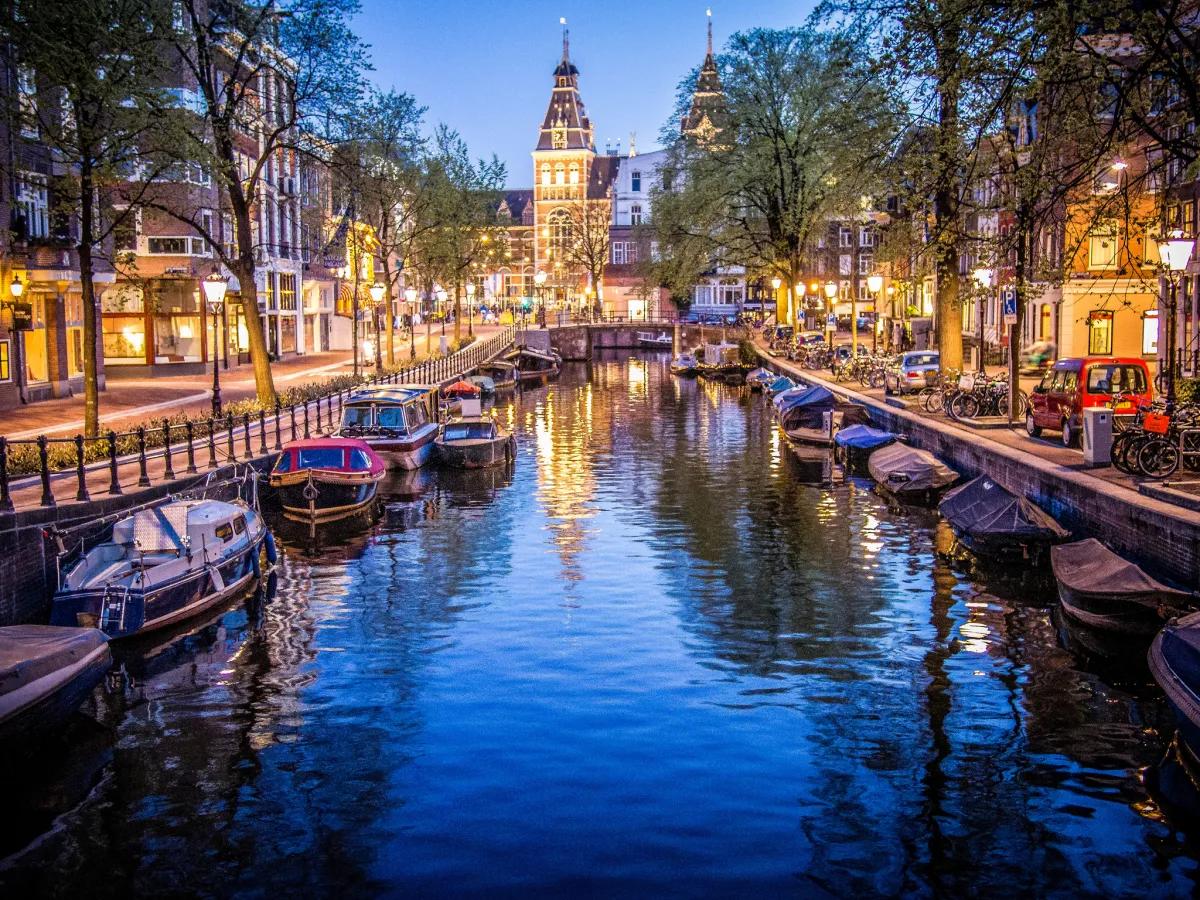 Photo: the Netherlands, via photos.tripsite.com
The Political Stakes
This matters electorally in ways that Westminster has been slow to appreciate. The death of the local pub, the closure of the restaurant that anchored the high street, the absence of anywhere to go on a Saturday evening — these are not abstract economic statistics. They are felt, viscerally and personally, by millions of people in precisely the towns and constituencies that decide British general elections. The voter who cannot find anywhere to eat in their own town centre is not weighing up macroeconomic policy; they are drawing a simple conclusion about whether the people running the country have any idea what their life is actually like.
A conservative political offer built around liberating small businesses from the regulatory and fiscal stranglehold that is killing them — genuine business rates reform, real enforcement of public order, a licensing system that enables rather than obstructs — would find a ready audience in those emptying town centres. The question is whether anyone in the Conservative Party is prepared to make it with sufficient clarity and conviction.
Britain's town centres are not dying because people stopped wanting to go out — they are dying because government made it too expensive to stay open and too dangerous to go back.