The Foreign Aid Farce: Why Britain Borrows Billions to Fund Other Nations While Its Own People Queue at Food Banks

The Moral Absurdity of Deficit-Funded Generosity
Britain's foreign aid spending presents one of the most glaring contradictions in modern governance: a nation that borrows money to give it away whilst its own citizens struggle with the cost-of-living crisis. Despite reducing the target from 0.7% to 0.5% of Gross National Income in 2021, the UK still spent approximately £11.4 billion on overseas development assistance in 2023 — money we quite literally don't have.
This isn't charity; it's fiscal virtue signalling funded by future generations of British taxpayers who will inherit the debt. When the government runs a deficit, every pound sent overseas is a pound borrowed against our children's future, often at interest rates that make the true cost of this generosity far higher than the headline figures suggest.
The Establishment's Sacred Cow
The foreign aid lobby has successfully convinced successive governments that cutting overseas spending would somehow diminish Britain's standing on the world stage. This is the same establishment thinking that believes international approval matters more than domestic prosperity — a mindset that has consistently prioritised global opinion over British interests.
Consider the absurdity: Britain spends more on foreign aid than on the entire Home Office budget, yet we're told we can't afford proper border security. We send billions overseas whilst our own social care system crumbles and our defence capabilities atrophy. The message this sends is clear: the needs of foreign nations matter more than the welfare of British citizens.
Following the Money Trail
Where does this borrowed generosity actually go? A significant portion flows through multilateral organisations like the United Nations and World Bank, where British influence is diluted and accountability is minimal. These bureaucratic behemoths consume vast sums in administrative costs whilst delivering questionable results on the ground.
 Photo: World Bank, via pasosom.org
 Photo: United Nations, via cdn.britannica.com
Even bilateral aid often serves the interests of the recipient nation's elite rather than its poor. Corruption, misallocation, and dependency creation are endemic problems that decades of aid spending have failed to solve. Meanwhile, the aid industry itself has become a self-perpetuating ecosystem of NGOs, consultants, and international bureaucrats whose livelihoods depend on maintaining the flow of funds, regardless of outcomes.
The Strategic Misdirection
Proponents argue that foreign aid serves Britain's strategic interests, helping to prevent migration and build diplomatic influence. This argument collapses under scrutiny. Countries receiving substantial British aid continue to be sources of mass migration to the UK, suggesting that our generosity neither reduces push factors nor generates meaningful gratitude.
China, meanwhile, has demonstrated how to build genuine influence abroad through strategic investment and trade partnerships that benefit both parties. Their Belt and Road Initiative creates economic dependencies that serve Chinese interests, whilst British aid too often amounts to unconditional transfers that generate no lasting leverage or goodwill.
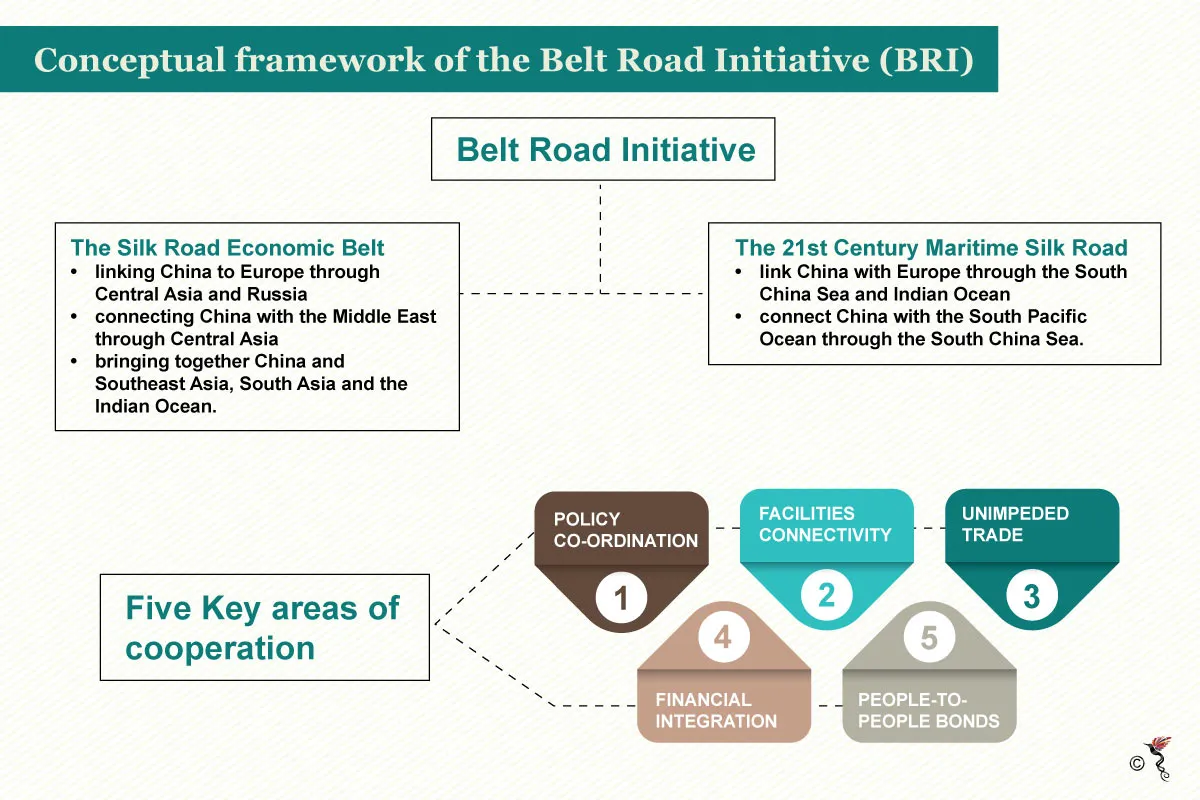 Photo: Belt and Road Initiative, via www.theaseanpost.com
The Domestic Cost
Whilst politicians posture about global poverty, British poverty persists and deepens. Food bank usage has exploded, pensioners choose between heating and eating, and working families struggle to afford basic housing. The disconnect between official priorities and lived reality couldn't be starker.
This isn't an argument for isolationism or callous indifference to global suffering. It's a recognition that government's primary duty is to its own citizens, and that sustainable international assistance requires a prosperous domestic base. A Britain that can't adequately fund its own public services or maintain its infrastructure has no business playing global philanthropist with borrowed money.
A Conservative Alternative
True conservative foreign policy would tie overseas spending directly to British interests. Aid should leverage trade deals, secure strategic partnerships, or advance specific foreign policy objectives. Every programme should face rigorous cost-benefit analysis, with clear metrics for success and automatic sunset clauses.
Much of what we currently categorise as 'aid' could be restructured as investment partnerships, loan guarantees, or trade facilitation programmes that benefit both Britain and recipient nations whilst avoiding the dependency trap of unconditional transfers.
The Path Forward
Britain needs a fundamental rebalancing of priorities. This doesn't mean abandoning international engagement, but it does mean ending the practice of borrowing money to fund global virtue signalling whilst domestic needs go unmet.
The Conservative Party, if it's to deserve that name, must have the courage to challenge the foreign aid orthodoxy. This means capping overseas spending at levels we can actually afford without borrowing, tying disbursements to measurable outcomes, and prioritising programmes that demonstrably serve British interests.
The Bottom Line
Charity begins at home — not because we're selfish, but because sustainable generosity requires a solid foundation, and because democratic governments owe their first duty to the citizens who elect and fund them, not to international opinion or bureaucratic convention.