
The Quiet Revolution
Whilst the nation debated Brexit and pandemic responses, a quiet revolution was taking place inside Britain's public institutions. Stonewall, the LGBT rights charity founded in 1989, had transformed itself into something far more ambitious: a shadow government department with the power to rewrite policies across the entire British state. Through its Diversity Champions programme, launched in 2010, Stonewall now counts over 850 organisations as paying members — including government departments, police forces, NHS trusts, universities, and even the BBC.
The scale of this institutional capture is breathtaking. The Ministry of Justice, the Home Office, the Department for Education, and dozens of other Whitehall departments pay annual membership fees to Stonewall whilst simultaneously implementing policies that bear the organisation's fingerprints. This is not consultation or advice — this is outsourcing fundamental questions of governance to an external lobby group with its own political agenda.
The Price of Ideology
The financial cost alone should alarm taxpayers. Membership fees range from £2,500 for smaller organisations to £20,000 for major institutions, with additional charges for training sessions, conferences, and bespoke advice. When multiplied across hundreds of public bodies, the annual bill runs into millions of pounds. The Cabinet Office has paid Stonewall over £100,000 since 2017, whilst individual NHS trusts have spent thousands more on 'trans inclusion' training sessions.
But money is merely the beginning. The real cost lies in the policy distortions that follow membership. Stonewall's guidance on single-sex spaces, for instance, has led to the effective abolition of women-only facilities across the public sector. Police forces have adopted policies allowing male officers who identify as women to conduct intimate searches of female suspects. NHS trusts have implemented guidance that prioritises gender identity over biological sex in medical treatment — a stance that can have life-or-death consequences.
The Chilling Effect
Perhaps most troubling is the culture of fear that Stonewall membership creates within institutions. Staff who raise concerns about policies — particularly those affecting women's rights or child safeguarding — face disciplinary action or career destruction. The organisation's workplace equality index operates as a modern-day star chamber, with institutions competing for rainbow rankings by demonstrating ever-greater ideological compliance.
Consider the case of Maya Forstater, who lost her job at the Centre for Global Development after expressing gender-critical views on social media. Or Allison Bailey, the barrister who faced investigation by her own chambers after co-founding the LGB Alliance. These are not isolated incidents but part of a systematic pattern where dissent from Stonewall orthodoxy carries professional consequences.
 Photo: Allison Bailey, via static.showit.co
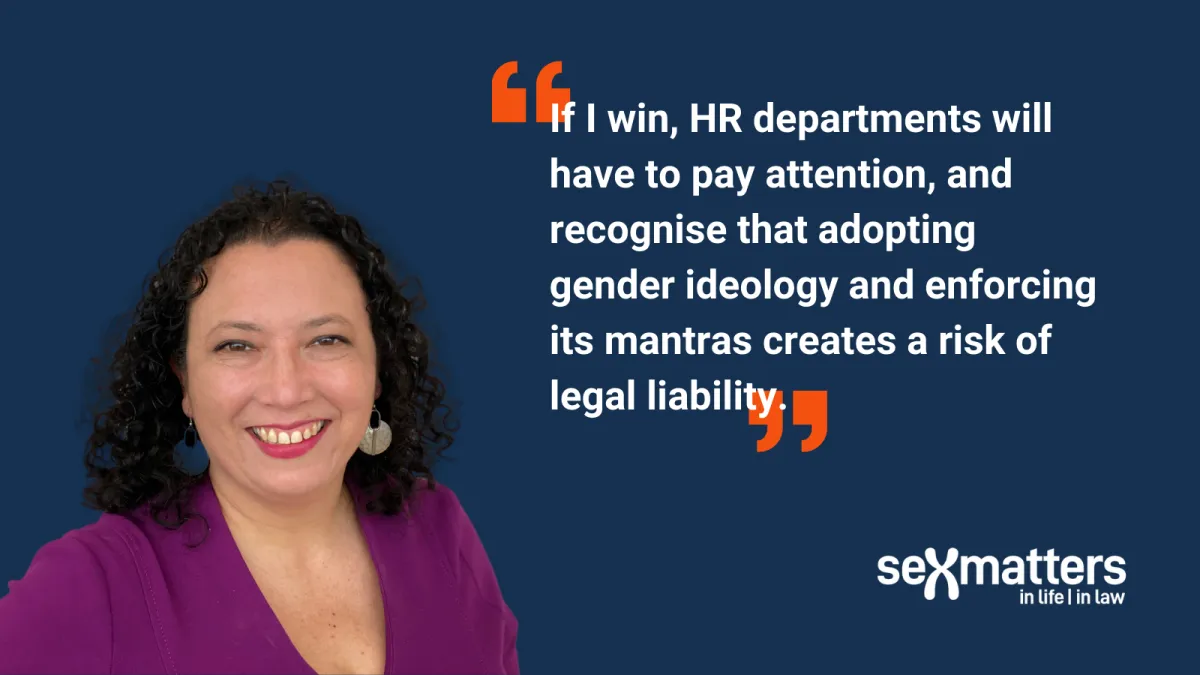 Photo: Maya Forstater, via sex-matters.org
Beyond Accountability
The constitutional implications are profound. When elected ministers implement policies written by an external lobby group, democratic accountability breaks down entirely. MPs cannot scrutinise or amend guidance that originates outside government. Voters cannot hold Stonewall accountable for policies that affect their daily lives. The organisation operates with the influence of a government department but none of the constitutional constraints.
This represents a fundamental corruption of British governance. Civil servants owe their loyalty to the Crown, not to external pressure groups. Police officers serve the public, not lobby organisations. Yet through the Diversity Champions programme, Stonewall has created a parallel chain of command that bypasses democratic oversight entirely.
The International Context
Britain is not alone in experiencing this phenomenon, but it has gone further than most comparable democracies. In the United States, similar lobby groups operate primarily through litigation and electoral politics — transparent processes subject to public scrutiny. In Britain, Stonewall has achieved far greater influence through the back door, embedding itself within the machinery of state itself.
The comparison with other single-issue lobby groups is instructive. Environmental organisations, trade unions, and business groups all seek to influence policy, but none have achieved the systematic institutional capture that Stonewall enjoys. None receive direct funding from the organisations they seek to influence whilst simultaneously setting their internal policies.
The Path Forward
The solution is straightforward but requires political courage. No public institution should pay membership fees to external lobby groups, regardless of their cause. Government departments, police forces, NHS trusts, and other taxpayer-funded bodies must end their Diversity Champions memberships and develop policies through proper democratic channels.
This does not mean abandoning equality or diversity — it means ensuring that such policies emerge from legitimate democratic processes rather than external pressure groups. Parliament, not Stonewall, should determine the law on sex and gender. Ministers, not lobby groups, should set government policy. Local democracy, not London-based charities, should shape public services.
Democratic Restoration
Critics will claim that ending these relationships represents a retreat from equality or LGBT rights. This argument fundamentally misunderstands the issue. The problem is not Stonewall's advocacy for LGBT rights — a legitimate democratic activity — but its capture of the institutions meant to serve all citizens equally.
A healthy democracy requires clear boundaries between advocacy groups and governing institutions. When those boundaries collapse, as they have with Stonewall, democracy itself is undermined. Citizens lose confidence in institutions they perceive as captured by special interests. Policy-making becomes divorced from public opinion and electoral mandates.
The Stonewall stranglehold represents the most successful ideological capture operation in modern British public life — and it must end. Britain's institutions belong to the people who fund them, not the lobby groups who have learned to game them.