The Great Housing Con
Across Britain, a quiet scandal is unfolding in council housing departments. While working families languish on waiting lists for fifteen years or more, newly arrived migrants are fast-tracked into social housing within months of arrival. The system has been rigged against the very people it was designed to serve, and the establishment's response has been a collective shrug.
The numbers tell a damning story. In Tower Hamlets, the average wait for a two-bedroom property is now 14 years for existing residents, yet housing officers routinely invoke 'urgent need' provisions to house asylum seekers and refugees within six months. In Birmingham, families with local connections stretching back generations watch as council properties are allocated to those who arrived last Tuesday, armed with nothing more than a human rights lawyer and a sob story.
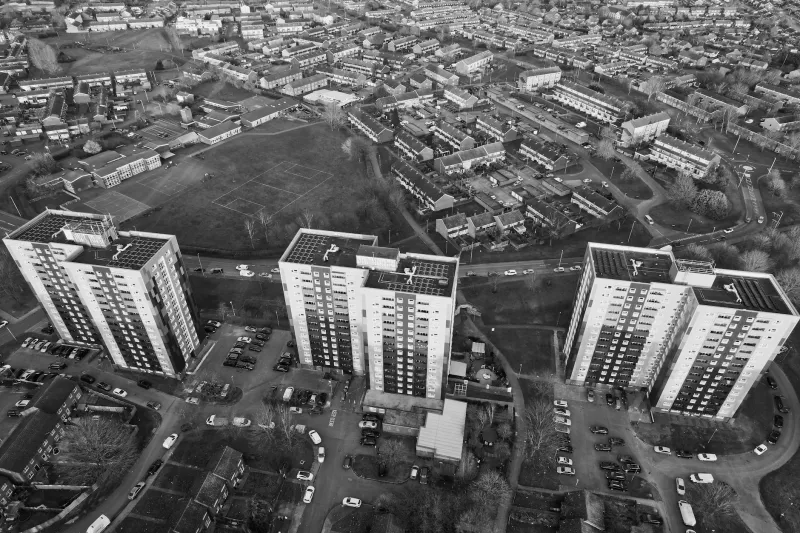
 Photo: Tower Hamlets, via cdn.britannica.com
The Legal Framework of Betrayal
The rot starts at the top. The Human Rights Act 1998, sold to the British public as a basic charter of freedoms, has been weaponised by activist lawyers and diversity officers to override common sense and fairness. Article 8 — the right to family life — is routinely cited to justify housing allocations that would have been unthinkable a generation ago.
Councils now operate under a web of equalities duties that effectively mandate discrimination against their own residents. The Equality Act 2010 requires local authorities to have 'due regard' to eliminating discrimination and advancing equality of opportunity. In practice, this has created a perverse incentive structure where housing officers are rewarded for prioritising those deemed to have 'protected characteristics' over those with mere local connections and taxpaying records.
The 2002 Nationality, Immigration and Asylum Act compounds the problem by placing statutory duties on councils to house certain categories of migrants while offering no corresponding protection for British families. The result is a two-tier system where citizenship has become a disadvantage in accessing social housing.
The Postcode Lottery of Despair
The scale of this betrayal varies wildly across the country, creating a postcode lottery of despair for working families. In Newham, East London, the waiting list for social housing has ballooned to over 32,000 households, with average waits now exceeding 12 years for family accommodation. Yet freedom of information requests reveal that over 40% of new lettings in 2023 went to households with less than two years' local connection.
Similar patterns emerge across urban Britain. In Manchester, Leicester, and Bradford, the story is depressingly familiar: decades-long waits for local families, express lanes for newcomers with the right legal representation. The irony is palpable — areas with the strongest traditions of working-class solidarity have become laboratories for its systematic destruction.
The human cost is measured not in statistics but in broken promises and shattered communities. Sarah Thompson, a teaching assistant from Oldham, has been on her council's housing list for 16 years while raising three children in overcrowded private accommodation. Last month, she watched a family who arrived from Eritrea six months ago move into the very property she had been promised was 'coming soon' for the past three years.
The Diversity Officer Class
Behind this systematic unfairness sits a new class of bureaucrat: the diversity and inclusion officer. These highly paid activists, embedded within council housing departments, have transformed what should be a straightforward administrative process into an ideological battleground.
Freedom of information requests reveal that major councils now employ dozens of such officers, earning salaries that would make private sector workers weep. Their job descriptions read like manifestos for social engineering: 'challenging unconscious bias in housing allocation', 'promoting inclusive practices', and 'ensuring equitable outcomes for marginalised communities'.
The language is deliberately opaque, but the effect is crystal clear. These officers have created parallel assessment criteria that systematically advantage certain groups while penalising others. A single mother from Somalia with no local connections scores higher on their 'vulnerability matrix' than a British family with three generations of local roots and a perfect tenancy record.
The Counter-Argument Charade
Progressive defenders of this system deploy predictable arguments. They claim that housing allocation must be based purely on 'need', not on local connections or contribution. They invoke international human rights law and point to Britain's obligations under various UN conventions.
This argument crumbles under scrutiny. 'Need' has been redefined to exclude the basic human need for fairness and reciprocity that underpins all successful societies. The family that has waited fifteen years while paying council tax and following the rules has needs too — needs that are systematically ignored by a system that rewards queue-jumping and penalises patience.
The human rights argument is equally hollow. The European Court of Human Rights has never ruled that housing must be allocated without regard to local connection or contribution. Indeed, most European countries operate points-based systems that explicitly reward local ties and taxpaying records.
The Road Back to Sanity
Reform is both urgent and achievable. Conservative councils should immediately audit their allocation policies and strip out ideological bias. Local connection should return to the heart of housing allocation, with points awarded for years of residence, family ties, and contribution to the local community.
The 'vulnerability' assessments that have become tools for social engineering should be replaced with objective criteria. Housing should be allocated on clear, transparent rules that residents can understand and trust. The army of diversity officers should be disbanded, their salaries redirected to actually building homes.
Most importantly, the Conservative Party must find the courage to challenge the legal framework that enables this betrayal. The Human Rights Act should be reformed or replaced with a British Bill of Rights that protects genuine rights without creating a charter for queue-jumping.
A System in Moral Collapse
The social housing scandal represents something deeper than administrative failure — it is the symptom of a system in moral collapse. When councils prioritise newcomers over natives, they are not just being unfair; they are destroying the social contract that holds communities together.
Britain's social housing was built by and for the working class, funded by their taxes and sustained by their labour. To see it transformed into a resettlement programme for the world's displaced is not just wrong — it is a betrayal of everything these communities once stood for.
The choice is clear: restore fairness to social housing allocation, or watch working-class Britain's faith in the system die completely.