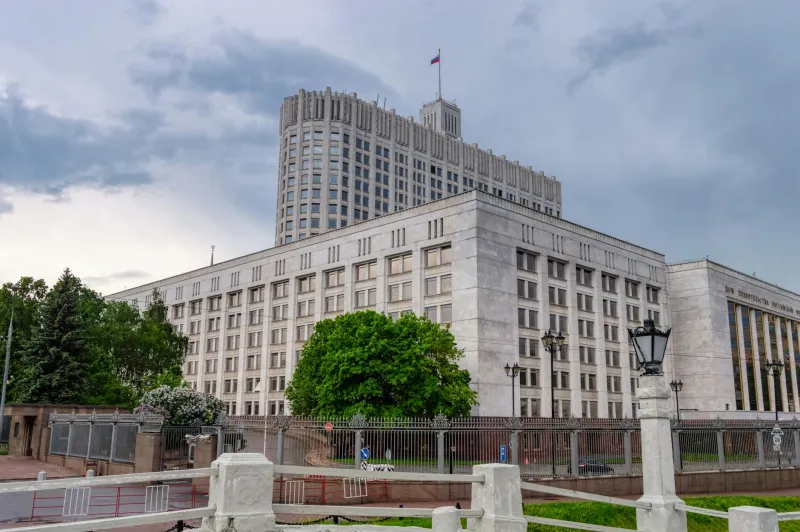
The Unelected Empire That Rules Britain
Whilst politicians argue over budgets and manifestos, a shadow government of unelected bureaucrats quietly spends billions of pounds telling British citizens how to think, what to eat, and how to raise their children. Welcome to the quango state—a labyrinthine network of quasi-autonomous non-governmental organisations, arm's-length bodies, and taxpayer-funded NGOs that has grown into Britain's most expensive and least accountable branch of government.
The numbers alone should terrify any taxpayer with a functioning calculator. According to the Cabinet Office's latest Public Bodies directory, Britain maintains over 300 non-departmental public bodies, consuming approximately £90 billion annually—roughly equivalent to the entire education budget. Yet unlike elected MPs or councillors, these organisations operate with minimal oversight, pursuing agendas that often directly contradict the wishes of the voters who fund them.
The Progressive Agenda Factory
Consider the Equality and Human Rights Commission, which receives £17.1 million annually to lecture businesses on diversity quotas and prosecute Christian bakers who decline to write messages supporting same-sex marriage. Or take the Food Standards Agency, whose £135 million budget funds campaigns against traditional British foods whilst promoting plant-based alternatives that align suspiciously with fashionable environmental activism.
The Arts Council England exemplifies this ideological capture perfectly. With an annual budget of £445 million, it systematically defunds traditional cultural institutions whilst lavishing grants on performance art celebrating transgender identity and post-colonial guilt. Meanwhile, local theatre groups staging Shakespeare struggle for basic funding—apparently, the Bard isn't sufficiently diverse for modern sensibilities.
Perhaps most egregiously, consider the Climate Change Committee, whose £4.2 million budget enables six unelected academics to dictate energy policy that will cost British families thousands of pounds annually through Net Zero regulations. These are the same experts who assured us that renewable energy would reduce bills—a promise that has aged about as well as their temperature predictions.
Democracy's Achilles Heel
The quango system represents a fundamental assault on democratic accountability. When voters elect Conservative governments promising lower taxes and traditional values, they discover that actual policy implementation remains in the hands of progressive bureaucrats who view election results as temporary inconveniences rather than democratic mandates.
This explains why Conservative governments consistently fail to deliver conservative outcomes. David Cameron promised a "bonfire of the quangos" in 2010, yet the number of public bodies actually increased during his tenure. Theresa May pledged to tackle the "burning injustices" perpetuated by unaccountable institutions, then presided over their expansion. Boris Johnson railed against the "blob" whilst simultaneously funding its growth.
The problem isn't individual Conservative politicians lacking spine—though that certainly doesn't help. The structural issue runs deeper: Britain has created an entire class of professional bureaucrats whose careers depend on expanding state intervention, regardless of which party nominally governs.
The Cost of Unaccountable Government
Beyond the direct financial burden, quangos impose enormous indirect costs through regulatory compliance and ideological conformity. Small businesses spend thousands of pounds annually navigating equality impact assessments demanded by various diversity bodies. Universities divert resources from education to satisfy the Office for Students' access and participation requirements. Even charities must demonstrate commitment to progressive causes to secure funding from grant-making quangos.
This regulatory web strangles innovation and entrepreneurship whilst rewarding compliance over competence. Why risk starting a business when success depends more on satisfying unelected bureaucrats than serving customers? Why pursue academic excellence when university funding prioritises demographic targets over educational outcomes?
The human cost is equally devastating. Consider the Disclosure and Barring Service, whose £88 million budget funds background checks that prevent thousands of qualified individuals from working with children or vulnerable adults based on minor historical infractions. Meanwhile, the same system routinely fails to identify genuinely dangerous individuals—a perfect metaphor for quango inefficiency.
The Conservative Case for Abolition
Liberal defenders argue that quangos provide essential expertise and independence from political interference. This misses the fundamental point: in a democracy, political interference is called "accountability." Voters should determine priorities through elections, not unelected experts pursuing personal ideological preferences.
The expertise argument collapses under scrutiny. The same climate scientists who demand we trust their models on global warming have consistently failed to predict energy costs or grid reliability. The diversity experts who lecture companies on inclusion preside over increasingly divided workplaces. The health authorities who claimed lockdowns would last "three weeks to flatten the curve" destroyed businesses and education for two years.
Moreover, the independence claim is laughable when examining quango recruitment patterns. These organisations systematically hire from the same narrow pool of progressive activists, creating an echo chamber that reinforces rather than challenges government groupthink.
Root and Branch Reform
Tinkering at the margins will not solve Britain's quango crisis. Conservative governments must commit to systematic abolition, not cosmetic reorganisation. Every public body should justify its existence against a simple test: could this function be performed better by elected politicians, private markets, or voluntary organisations?
Functions genuinely requiring independence—such as judicial appointments or electoral administration—should operate under strict parliamentary oversight with clear democratic accountability. Everything else should either return to ministerial departments or face abolition.
The savings would be transformational. Eliminating just half of Britain's quangos could fund significant tax cuts whilst improving democratic governance. More importantly, it would restore the principle that in a democracy, the people's representatives—not unelected bureaucrats—determine how taxpayers' money gets spent.
Reclaiming Democratic Governance
The quango state represents everything wrong with modern British governance: unaccountable power, ideological capture, and contempt for democratic mandate. Until Conservative politicians find the courage to dismantle this parallel government, voters will continue discovering that elections change faces but never policies.
True conservative governance requires more than winning elections—it demands destroying the institutional infrastructure that prevents democratic will from becoming democratic action.