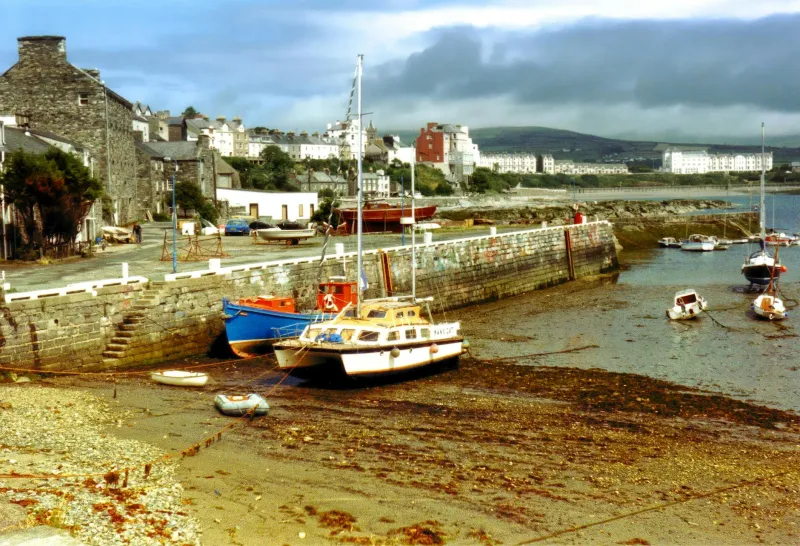
Four years after Brexit, the fishing boats moored in Brixham, Newlyn, and Whitby tell a story of promises broken and sovereignty surrendered. The very communities that delivered the Leave vote in 2016 — trusting Conservative pledges to "take back control" of British waters — now watch as Spanish and French trawlers continue to hoover up fish from grounds their grandfathers once called their own.
The Great Brexit Betrayal
The 2019 Conservative manifesto was unambiguous: "We will become an independent coastal state and we will take back control of our fishing waters." Boris Johnson stood on Cornish harbours promising fishermen a "sea of opportunity." Yet the Trade and Cooperation Agreement signed with the EU in December 2020 tells a different tale — one of quotas barely changed, access rights preserved, and British fishing communities left high and dry.
Under the deal, EU vessels retain access to UK waters until 2026, with only a gradual reduction in their catch quotas. For species like cod and haddock in the North Sea, EU boats can still take roughly 80% of their pre-Brexit allocation. Meanwhile, British fishermen report being outgunned by massive foreign factory ships that can process entire shoals whilst smaller UK vessels are restricted by quotas that haven't meaningfully increased since we supposedly "took back control."
The Numbers Don't Lie
The statistics paint a damning picture of this quiet capitulation. According to Marine Management Organisation data, in 2023 foreign vessels landed approximately 58% of the total fish caught in UK waters — barely different from pre-Brexit levels. The Dutch alone took £43 million worth of fish from British waters last year, whilst many UK fishing businesses struggle to remain viable.
Consider the case of mackerel — a species abundant in British waters. Under current arrangements, the UK's share of the Total Allowable Catch remains at just 20%, with Norway taking 54% and the EU 26%. For a nation surrounded by some of Europe's richest fishing grounds, this represents not sovereignty but continued subjugation.
The human cost is equally stark. The UK's fishing fleet has shrunk from over 21,000 vessels in 1996 to fewer than 6,000 today. Coastal communities from the Shetlands to the South West have watched their traditional industries wither, even as foreign fleets profit from their ancestral waters.
The Diplomatic Excuse Machine
Government ministers defend these arrangements as "pragmatic" and "necessary for trade relations." They point to increased quotas for some species and the theoretical ability to withdraw access rights after 2026. This misses the fundamental point: Brexit was not about marginally better deals within the EU's framework — it was about genuine independence and the right to prioritise British interests.
The Foreign Office's approach treats fishing as a bargaining chip in broader diplomatic games, rather than recognising it as a cornerstone of coastal communities' economic survival. When civil servants negotiate away fishing rights to smooth trade talks, they're not making tough but necessary compromises — they're betraying the very voters who delivered Brexit.
What Real Sovereignty Looks Like
Other independent coastal states offer instructive contrasts. Iceland and Norway, never bound by the Common Fisheries Policy, have maintained thriving fishing industries whilst carefully managing their marine resources. They demonstrate that it's perfectly possible to be good neighbours whilst putting domestic fishing communities first.
A genuinely sovereign British approach would mean:
- Immediate implementation of a 12-mile exclusion zone for foreign vessels
- Quotas set primarily to benefit UK fishing communities
- Investment in modern processing facilities to capture more value from British catches
- Immigration policies that don't undercut wages for British fishermen
- Marine protection that serves both conservation and industry needs
The Coastal Reckoning
The political implications extend far beyond fishing itself. These coastal constituencies — from Cornwall to the Scottish Highlands — delivered Brexit precisely because they were promised genuine change, not cosmetic adjustments to EU membership terms. Their continued economic decline whilst foreign competitors prosper in British waters represents a betrayal that will resonate for decades.
Labour may calculate that fishing communities have nowhere else to turn, but political loyalty built on broken promises is brittle. The rise of Reform UK and growing disillusionment with mainstream politics partly stems from exactly this kind of establishment duplicity — promising sovereignty whilst delivering managed decline.
Beyond the 12-Mile Limit
The fishing debacle exemplifies a broader failure of post-Brexit governance: the inability to distinguish between legal sovereignty and meaningful independence. Britain may have left the EU's institutions, but our political class remains psychologically captured by Brussels' priorities and methods.
Real sovereignty means being willing to disappoint foreign governments when British interests are at stake. It means recognising that some things — like the survival of coastal communities — matter more than diplomatic convenience or abstract trade statistics.
The Tide Must Turn
Britain's fishing waters remain one of our greatest natural assets, capable of supporting thriving communities and sustainable industries for generations. But realising this potential requires political leaders who understand the difference between independence and isolation, between pragmatism and surrender.
The fishing industry deserves better than managed decline dressed up as diplomatic necessity — and the coastal communities who trusted Brexit deserve leaders who will finally deliver on the promises that won their votes.