The 20mph Tyranny: How Unelected Road Safety Zealots Are Overriding the Democratic Will of Ordinary Drivers
The Slow-Motion Revolution
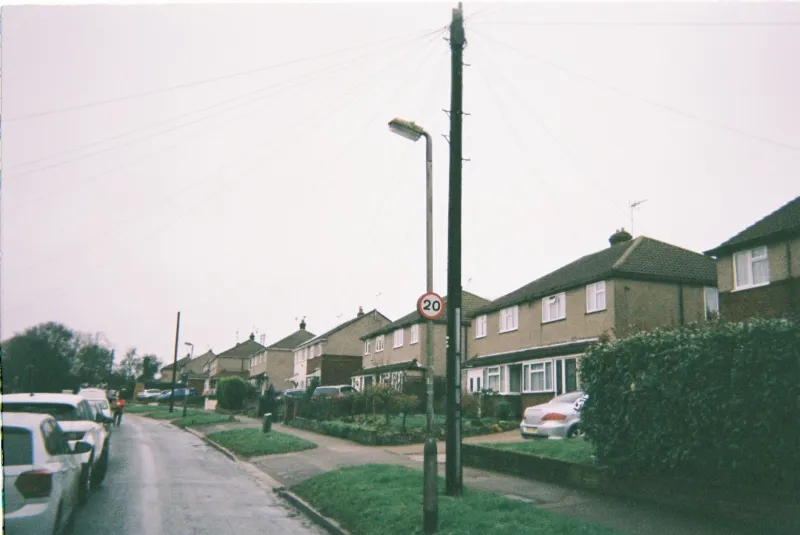
Across Britain, a quiet revolution is throttling the nation's roads. From Wales to Westminster, blanket 20mph speed limits are being imposed on streets where 30mph has served perfectly well for decades. This isn't progress — it's paternalistic authoritarianism dressed up as public safety, pushed by unelected zealots who believe they know better than the drivers who actually use these roads.
The Welsh government's decision to impose a default 20mph limit on all restricted roads represents the most comprehensive assault on driving freedom in modern history. Despite a petition attracting over 460,000 signatures — the largest in Welsh parliamentary history — and polling showing 70% public opposition, the policy was rammed through regardless. This contempt for democratic opinion has become the template for similar schemes spreading across England.
The Quango Conspiracy
Behind this movement lurks a network of publicly funded organisations that have appointed themselves as guardians of road safety whilst systematically ignoring public opinion. The Road Safety Trust, 20's Plenty for Us, and Living Streets operate as a coordinated lobby, producing selective research and pressuring councils to adopt ever-more restrictive policies.
These groups share personnel, funding sources, and talking points, creating an echo chamber that amplifies marginal opinion into apparent consensus. They've mastered the art of policy capture — infiltrating council transport departments, advising government reviews, and positioning themselves as the authoritative voice on road safety whilst representing virtually no one beyond their own activist membership.
Consider the influence of 20's Plenty for Us, founded by Rod King, a retired IT consultant who has somehow become Britain's self-appointed speed limit tsar. His organisation claims to represent 'communities' demanding lower speeds, yet its campaigns are invariably top-down affairs driven by council officers and activist pressure rather than genuine grassroots demand.
The Evidence Vacuum
The scientific case for blanket 20mph limits is remarkably weak. The government's own impact assessment for Wales admitted the policy would deliver minimal safety benefits whilst imposing significant economic costs through increased journey times and fuel consumption. Independent analysis by transport economists suggests the scheme could cost the Welsh economy £4.5 billion over 30 years — a staggering price for marginal gains.
More damningly, real-world evidence from areas that have implemented 20mph limits shows mixed results at best. Portsmouth, often cited as a success story, saw accident rates fall by just 22% — hardly the transformational change promised by advocates. Meanwhile, compliance rates remain stubbornly low, with surveys showing most drivers continue to travel at 25-30mph regardless of posted limits.
The fundamental flaw in 20mph ideology is the assumption that all roads are identical. A residential street outside a primary school clearly requires different treatment from a main arterial route with good sight lines and minimal pedestrian activity. Yet blanket policies ignore these distinctions, applying one-size-fits-all solutions to infinitely varied circumstances.
The Democracy Deficit
What's most troubling about the 20mph crusade is its systematic circumvention of democratic accountability. In Wales, the policy was imposed through secondary legislation, avoiding proper parliamentary scrutiny. English councils have adopted similar tactics, using delegated powers to implement schemes without meaningful consultation or democratic mandate.
This represents a fundamental breach of the principle that significant policy changes require public consent. When Brighton and Hove City Council imposed 20mph limits across the city, it ignored its own consultation showing 61% opposition. Similar patterns emerge across the country — councils routinely disregard public opinion in favour of activist pressure and officer recommendations.
The consultation process itself has become corrupted. Questions are framed to elicit desired responses ('Do you support measures to make roads safer for children?'), whilst opposing voices are dismissed as representing 'vested interests' or lacking expertise. It's a masterclass in manufacturing consent whilst ignoring actual opinion.
The Nanny State Overreach
The 20mph movement embodies everything wrong with modern governance — the assumption that state officials know better than citizens how to conduct their daily lives. It treats adults as children incapable of adjusting their driving to road conditions, requiring artificial constraints to prevent inevitable catastrophe.
This paternalistic mindset extends beyond speed limits to a broader philosophy of social control. The same groups promoting 20mph limits also campaign for workplace parking levies, low traffic neighbourhoods, and restrictions on car ownership. Their ultimate goal isn't road safety — it's social engineering, using transport policy to reshape behaviour according to their environmental and political preferences.
The irony is that this approach often undermines genuine road safety. When speed limits are set arbitrarily low, they lose credibility and compliance. Drivers become focused on speedometers rather than hazards, whilst the constant stop-start driving required in 20mph zones increases emissions and fuel consumption.
Economic Carnage
The economic impact of blanket 20mph limits extends far beyond increased journey times. Delivery companies face higher costs, emergency services experience delayed response times, and businesses struggle with reduced accessibility. The Federation of Small Businesses estimates that the Welsh 20mph policy alone could cost members £4,000 annually through increased operating expenses.
These costs aren't abstract statistics — they represent real families and businesses bearing the price of activist ideology. The corner shop owner facing higher delivery charges, the tradesman stuck in artificially congested traffic, the parent spending extra minutes in the car that could be spent with children — all are casualties of a policy imposed without their consent or consideration of their needs.
The Enforcement Racket
Perhaps most cynically, many councils see 20mph limits as revenue generators rather than safety measures. Lower speed limits create more technical violations, generating fines from drivers who pose no actual danger. It's taxation by stealth, using safety rhetoric to justify what amounts to a driving tax on ordinary motorists.
The proliferation of speed cameras in 20mph zones confirms this suspicion. If the primary concern were safety, councils would focus on education and engineering solutions. Instead, they deploy enforcement technology designed to maximise penalties rather than prevent accidents.
International Reality Check
Proponents often cite European cities as models for 20mph success, conveniently ignoring crucial differences in urban design, transport infrastructure, and driving culture. Amsterdam's low speeds work because the city was redesigned around cycling and walking over decades. Imposing similar limits on British roads designed for 30mph traffic creates conflict rather than harmony.
Even within Europe, blanket 20mph policies remain controversial. German cities have resisted wholesale speed reductions, preferring targeted interventions based on local conditions. It's only in Britain that activist groups have convinced policymakers to adopt such comprehensive and indiscriminate approaches.
The Democratic Solution
The answer to 20mph tyranny isn't technical but political. Speed limits should be set by democratically accountable representatives based on local evidence and public consultation, not imposed by unelected activists and compliant officials.
This requires stripping transport quangos of their policy influence, ending the revolving door between activist organisations and government roles, and restoring genuine local democracy to transport decisions. Most importantly, it demands politicians with the courage to tell pressure groups that their ideology doesn't trump public opinion.
Reclaiming the Roads
The 20mph movement represents everything wrong with contemporary governance — the triumph of activist minorities over democratic majorities, the preference for ideology over evidence, and the treatment of citizens as subjects requiring state guidance in their daily lives.
Britain's roads belong to the people who use them, not the zealots who would control them — and it's time our politicians remembered that fundamental truth.